
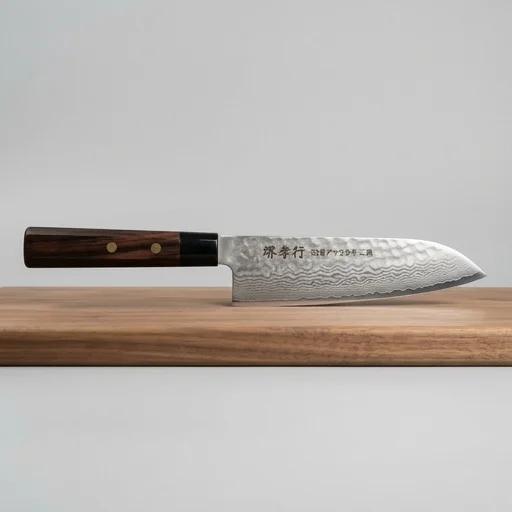
Santoku & NakiriSakai Takayuki
Sakai Takayuki Damascus Santoku Knife
Whetstone scoreEditorial rating from spec, steel and build analysis. Not a customer rating.
The Sakai Takayuki Damascus Santoku Knife is a premium Japanese kitchen tool that blends centuries-old Sakai forging tradition with modern VG-10 steel performance.
- SteelVG-10
- Blade6.5 in
- Weight140 g
As an Amazon Associate we earn from qualifying purchases. Prices and availability are shown on Amazon.
The verdict
The Sakai Takayuki Damascus Santoku Knife is a premium Japanese kitchen tool that blends centuries-old Sakai forging tradition with modern VG-10 steel performance. It delivers outstanding sharpness, elegant aesthetics, and precise control, making it an excellent investment for home cooks and professional chefs who are willing to maintain it properly.
Spec sheet
Specifications
Blade length
6.5in / 165 mm
Steel family
VG-10 & VG-MAX
The workhorse of Japanese stainless. VG-10 and its successor VG-MAX add cobalt and vanadium for toughness, usually sandwiched in Damascus cladding.
Upkeep
- Blade Length
- 165 mm
- Blade Material
- VG-10 steel with damascus cladding
- Handle Material
- Pakkawood (octagonal)
- Total Weight
- approximately 140 g
- Origin
- Sakai, Osaka, Japan
- Category
- Santoku & Nakiri
- Maker
- Sakai Takayuki
Trade-offs
Pros & cons
What we like
- Exceptional edge retention from VG-10 core
- Beautiful layered damascus pattern on each blade
- Lightweight yet well-balanced for all-day use
- Versatile for slicing, dicing, and mincing vegetables and proteins
- Comfortable ergonomic handle reduces hand fatigue
- Holds a razor-sharp edge longer than Western knives
What to know
- Requires hand washing and immediate drying to prevent rust
- Not dishwasher safe
- Higher price point than standard kitchen knives
- Thin blade can chip if used on bones or frozen food
- Sharpening requires whetstone skill rather than pull-through sharpeners
Highlights
What stands out
- 01VG-10 stainless steel core with 33-layer damascus cladding
- 02Traditional Sakai-forged blade from Osaka craftsmen
- 03165mm (6.5-inch) santoku blade length
- 04Octagonal mahogany-pattern pakkawood handle
- 05Hand-finished tsuchime hammered texture on some batches
- 06Full tang construction for balance and durability
In depth
Full review
The Sakai Takayuki damascus santoku knife carries forward a tradition of Japanese bladesmithing that traces back centuries to the city of Sakai, long regarded as the heartland of Japanese cutlery craftsmanship. This santoku features a core of hardened VG-10 stainless steel, prized for its ability to take and hold a razor-sharp edge, sandwiched between layers of softer damascus steel that fold outward in a rippling, wave-like pattern along the blade face. The result is not only a visually striking knife, with each piece bearing a unique grain reminiscent of flowing water or hammered metal, but also a tool engineered for serious kitchen performance, balancing hardness at the cutting edge with flexibility and durability throughout the rest of the blade.
True to the santoku shape, the blade measures roughly 165 to 180 millimeters depending on the specific model, with a flat edge profile and a slightly rounded tip that departs from the pointed curve of a Western chef's knife. This geometry makes it exceptionally well suited to the three core tasks its name references—slicing, dicing, and mincing—allowing the cook to move through vegetables, fish, and boneless meats with clean, efficient strokes rather than a rocking motion. The thin, precise grind behind the edge reduces drag through produce, minimizing tearing or bruising, while the slightly wider blade face creates a natural barrier that helps keep sliced ingredients from clinging to the steel as they're transferred to a bowl or pan.
Each Sakai Takayuki damascus santoku is typically fitted with a traditional Japanese handle, often crafted from magnolia wood or a durable composite, shaped to rest comfortably in the hand during extended prep work and finished with a water buffalo horn or pakka wood ferrule for added durability at the bolster. The knife demands the same care given to any high-carbon or layered steel blade: hand washing, prompt drying, and occasional honing to preserve the fine edge that the artisans in Sakai spend considerable time hand-finishing before the knife ever reaches a kitchen. For home cooks and professional chefs alike who want a dependable all-purpose blade that merges centuries-old technique with everyday practicality, this santoku offers both the aesthetic distinction of damascus patterning and the functional reliability expected from Sakai's storied knife-making lineage.
Ready to cut?
Sakai Takayuki Damascus Santoku Knife
Santoku & Nakiri · VG-10 · score 9.4/10
Keep comparing
Similar knives worth a look
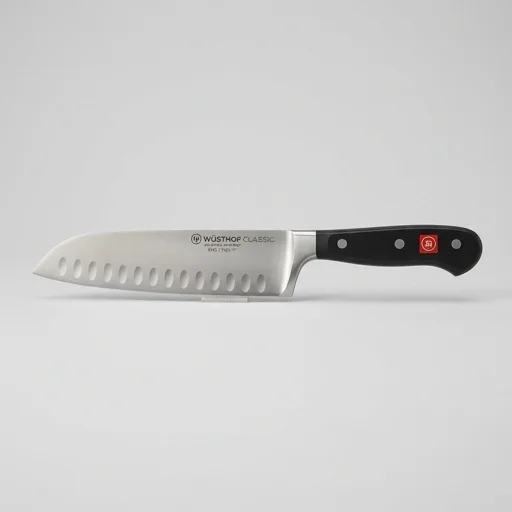 9.4Wüsthof Classic Hollow Edge Santoku 7-Inch
- Reduces food sticking
- Precision German forging
- Long-lasting sharp edge
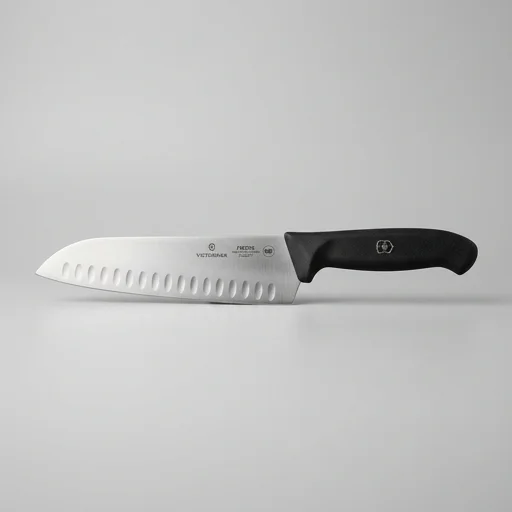 9.4Victorinox Fibrox Pro Santoku 7-Inch Knife
- Razor-sharp performance
- Non-slip comfort grip
- Budget-friendly professional quality
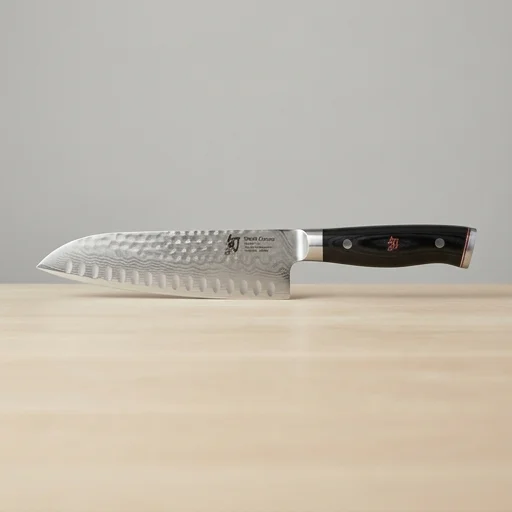 9.4Shun Classic 7-inch Santoku
- Superior edge retention
- Stunning Damascus finish
- Precision vegetable slicing
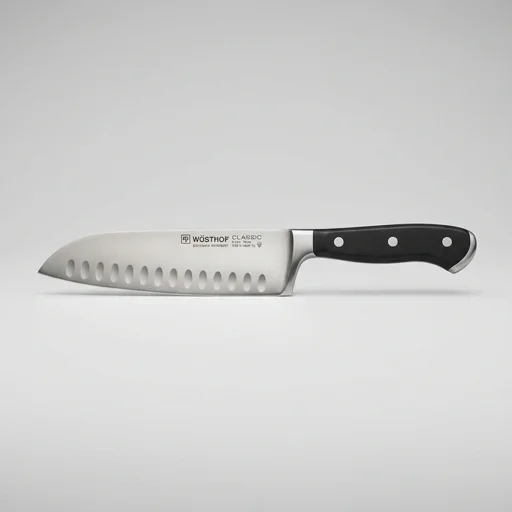 9.4Wüsthof Classic Santoku Knife 7-Inch
- Razor-sharp PEtec edge
- Non-stick Granton blade
- Lifetime warranty included